Physical AI Breakthrough: LG and NVIDIA Unveil 2026 Robotics Vision
LG and NVIDIA are engaged in exploratory talks on physical AI, data centers, and mobility, signaling a major shift in industrial automation. The collaboration highlights the critical role of NVIDIA’s Omniverse and robotics platforms in enabling real-world AI systems.

Physical AI Breakthrough: LG and NVIDIA Unveil 2026 Robotics Vision
summarize3-Point Summary
- 1LG and NVIDIA are engaged in exploratory talks on physical AI, data centers, and mobility, signaling a major shift in industrial automation. The collaboration highlights the critical role of NVIDIA’s Omniverse and robotics platforms in enabling real-world AI systems.
- 2Physical AI Breakthrough: LG and NVIDIA Unveil 2026 Robotics Vision Physical AI is no longer a concept—it’s the operational backbone of next-gen industrial automation.
- 3In early 2026, LG and NVIDIA held high-level talks in Seoul, aligning on a shared roadmap to deploy scalable, AI-driven robotics ecosystems.
psychology_altWhy It Matters
- check_circleThis update has direct impact on the Robotik ve Otonom Sistemler topic cluster.
- check_circleThis topic remains relevant for short-term AI monitoring.
- check_circleEstimated reading time is 3 minutes for a quick decision-ready brief.
Physical AI Breakthrough: LG and NVIDIA Unveil 2026 Robotics Vision
Physical AI is no longer a concept—it’s the operational backbone of next-gen industrial automation. In early 2026, LG and NVIDIA held high-level talks in Seoul, aligning on a shared roadmap to deploy scalable, AI-driven robotics ecosystems. Led by LG CEO Ryu Jae-cheol and NVIDIA’s Madison Huang, Senior Director of Product and Technical Marketing for Omniverse and Robotics, the collaboration marks a pivotal shift from isolated robots to interconnected, learning systems powered by digital twins and edge AI.
How NVIDIA Omniverse Enables Digital Twins for Industrial Scaling
NVIDIA’s Omniverse™ platform is the digital nerve center for simulating real-world factory environments. Manufacturers can now create hyper-accurate digital twins of warehouses, assembly lines, and logistics hubs, testing robotic behaviors under millions of virtual scenarios before physical deployment.
This reduces downtime by up to 70% and accelerates deployment cycles. Companies like Hexagon and Siemens are already using Omniverse to validate robot coordination, ensuring safety and efficiency at scale.
The Three-Computer Solution: Simulation, Training, Deployment
NVIDIA’s unified Three-Computer Solution integrates three core platforms:
- Omniverse™: Real-time simulation environment for virtual testing
- Isaac™: AI training suite for robotics perception and decision-making
- Cosmos™: Cloud-based orchestration for fleet-wide AI updates
Madison Huang has championed this architecture globally, helping partners like Foxconn and Toyota cut development time by over 50%.
Role of AI Data Centers in Powering Physical AI
Scaling physical AI demands massive computational power. LG and NVIDIA are co-designing next-gen AI data centers optimized for continuous training and real-time inference at the edge.
These facilities combine low-latency GPUs with energy-efficient cooling systems, enabling 24/7 learning from sensor data collected by robots in homes, factories, and urban mobility networks.
Madison Huang’s Leadership: Bridging Tech and Industry Narrative
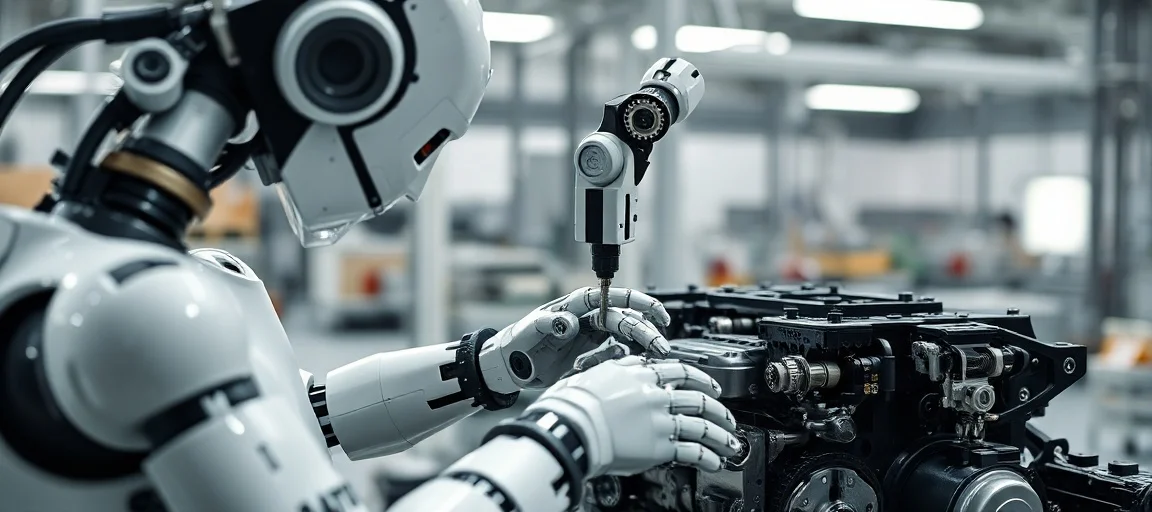
Madison Huang, with her background in luxury branding at LVMH and an MBA from London Business School, uniquely translates complex AI innovations into compelling industry narratives. She spearheaded the Isaac GR00T N1 foundation model—a generative AI system that allows humanoid robots to learn from just a few human demonstrations.
This innovation lowers barriers for manufacturers facing labor shortages, making advanced robotics accessible to SMEs and global supply chains alike.
Why This Partnership Will Define 2026’s Automation Landscape
LG’s hardware expertise in consumer interfaces and mobility platforms pairs seamlessly with NVIDIA’s AI software stack. Industry analysts predict a joint reference design for AI-powered service robots and urban mobility assistants will emerge by Q3 2026.
The convergence of digital twins, generative AI, and edge AI data centers is no longer theoretical—it’s operational. As physical AI moves from labs into homes, factories, and streets, LG and NVIDIA are setting the standard for what’s possible.
Physical AI isn’t the future—it’s the 2026 reality reshaping how we live and work.