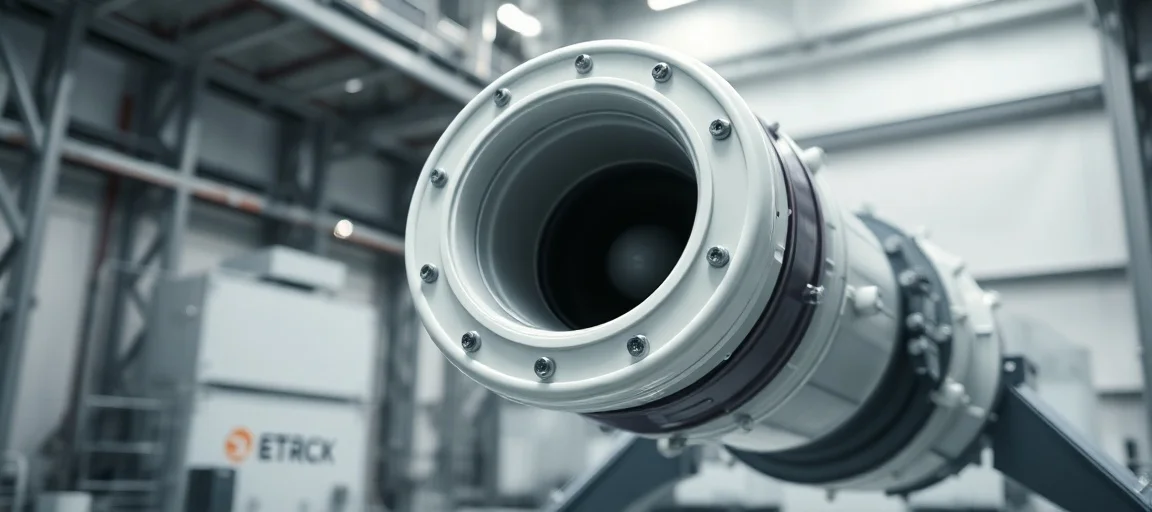
NVIDIA Space-1 Vera Rubin Module: AI-Powered Orbital Data Centers Launch in 2026
NVIDIA has unveiled the Space-1 Vera Rubin Module, a revolutionary AI-powered computing platform designed for deployment in orbit. This breakthrough enables real-time data processing in space, transforming how satellites handle geospatial intelligence and autonomous operations.

NVIDIA Space-1 Vera Rubin Module: AI-Powered Orbital Data Centers Launch in 2026
summarize3-Point Summary
- 1NVIDIA has unveiled the Space-1 Vera Rubin Module, a revolutionary AI-powered computing platform designed for deployment in orbit. This breakthrough enables real-time data processing in space, transforming how satellites handle geospatial intelligence and autonomous operations.
- 2Engineered as a compact orbital data center, it enables real-time AI processing aboard satellites, eliminating the need to downlink massive datasets to Earth.
- 3How Space-1 Vera Rubin Enables Real-Time AI in Orbit The module integrates NVIDIA’s latest accelerated architecture with custom GPUs optimized for space’s extreme conditions.
psychology_altWhy It Matters
- check_circleThis update has direct impact on the Sektör ve İş Dünyası topic cluster.
- check_circleThis topic remains relevant for short-term AI monitoring.
- check_circleEstimated reading time is 3 minutes for a quick decision-ready brief.
NVIDIA Space-1 Vera Rubin Module: AI-Powered Orbital Data Centers Launch in 2026
NVIDIA has unveiled the Space-1 Vera Rubin Module — a radiation-hardened, AI-powered computing platform designed for deployment in low Earth orbit (LEO) by 2026. Engineered as a compact orbital data center, it enables real-time AI processing aboard satellites, eliminating the need to downlink massive datasets to Earth.
How Space-1 Vera Rubin Enables Real-Time AI in Orbit
The module integrates NVIDIA’s latest accelerated architecture with custom GPUs optimized for space’s extreme conditions. It supports onboard data processing for anomaly detection, image recognition, and dynamic mission reprogramming — all without ground intervention. According to NVIDIA News, this transforms satellites from passive data collectors into autonomous decision-makers.
Why Radiation Hardening is Critical for Space Computing
Traditional computing systems fail in LEO due to cosmic radiation. The Space-1 Vera Rubin Module uses radiation-hardened components and advanced thermal management, ensuring 5+ years of reliable operation. This makes it ideal for long-duration Earth observation and national security missions.
Reducing Latency: From Hours to Minutes
Unlike conventional satellites that transmit raw imagery, the Vera Rubin Module analyzes, compresses, and prioritizes data in real time. During a wildfire, for example, it can identify hotspots and prioritize evacuation zones within minutes — not hours. This cuts bandwidth usage by up to 90%, per NVIDIA’s internal benchmarks.
Orbital Data Centers: The Next Frontier of AI
NVIDIA’s vision extends beyond a single module: it’s building a distributed network of AI-capable satellites called Orbital Data Centers (ODCs). These form an edge AI infrastructure in space, enabling instant geospatial intelligence for climate monitoring, disaster response, and defense.
Modular Design for Industry-Wide Adoption
Designed as a plug-and-play unit, the Space-1 Vera Rubin Module integrates seamlessly with satellite platforms from Maxar, Planet Labs, and others. This interoperability accelerates deployment across commercial and government constellations.
Flight Qualification Begins Late 2026
NVIDIA has partnered with leading satellite integrators to begin flight qualification testing in late 2026, with initial deployments planned for 2027 aboard Earth observation fleets. Industry analysts predict this could become the de facto standard for next-gen satellite computing — much like DGX did for data centers on Earth.
Space-Based AI Is No Longer Science Fiction
With the Space-1 Vera Rubin Module, NVIDIA isn’t just sending computers to space — it’s deploying intelligent systems that think, decide, and act at the edge of the atmosphere. The future of data isn’t on Earth. It’s orbiting above us — powered by NVIDIA.