Nvidia GTC 2026: How Compute Power Is Solving Robotics' Biggest Challenge
At GTC 2026, Nvidia unveiled a bold strategy to transform robotics by replacing the industry’s data scarcity with massive compute infrastructure. Autonomous vehicles, industrial bots, and humanoids are all set to receive AI upgrades powered by new hardware and software ecosystems.

Nvidia GTC 2026: How Compute Power Is Solving Robotics' Biggest Challenge
summarize3-Point Summary
- 1At GTC 2026, Nvidia unveiled a bold strategy to transform robotics by replacing the industry’s data scarcity with massive compute infrastructure. Autonomous vehicles, industrial bots, and humanoids are all set to receive AI upgrades powered by new hardware and software ecosystems.
- 2Instead of relying on limited real-world data, Nvidia is betting big on synthetic data, AI simulation, and massive-scale inference to accelerate physical AI.
- 3Starting in 2027, its infrastructure will power robotaxis, industrial robots, and humanoid systems—all unified under a single AI platform.
psychology_altWhy It Matters
- check_circleThis update has direct impact on the Robotik ve Otonom Sistemler topic cluster.
- check_circleThis topic remains relevant for short-term AI monitoring.
- check_circleEstimated reading time is 2 minutes for a quick decision-ready brief.
Nvidia GTC 2026: How Compute Power Is Solving Robotics' Biggest Challenge
At GTC 2026, Nvidia unveiled a paradigm shift: the robotics industry’s decades-old data scarcity is being replaced by a new frontier—compute power. Instead of relying on limited real-world data, Nvidia is betting big on synthetic data, AI simulation, and massive-scale inference to accelerate physical AI. Starting in 2027, its infrastructure will power robotaxis, industrial robots, and humanoid systems—all unified under a single AI platform.
Robotaxi Rollout: 28 Cities, One AI Core
Nvidia and Uber will deploy L4 autonomous vehicles across 28 major cities by 2028, including Chicago, Atlanta, and Berlin. These robotaxis run on the DRIVE Thor platform, powered by billions of simulated miles and real-time neural rendering.
- 10 billion+ simulated driving miles trained per week
- End-to-end AI models reduce latency to under 20ms
- Real-time sensor fusion enabled by Grace Blackwell GPUs
Industrial AI: Isaac Sim Transforms Factories
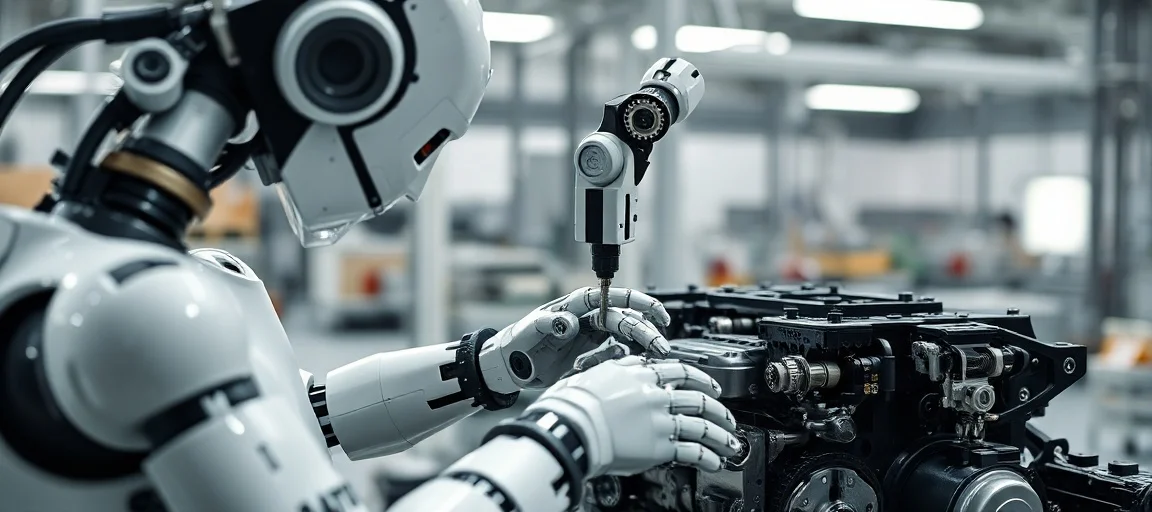
FANUC and ABB are integrating Nvidia Isaac Sim and Jetson AGX Orin into next-gen robotic arms, enabling dynamic task reconfiguration and predictive maintenance. This reduces downtime by up to 40%, according to Nvidia white papers.
Manufacturers now use digital twins of entire assembly lines for simulation-based training, eliminating costly physical prototypes. The result? Robots that adapt in seconds, not weeks.
Humanoid Robotics: From Lab to Living Rooms
Humanoid robots, long stalled by data starvation, now train in Nvidia’s ‘Data Factory’—a cloud pipeline generating 10 million simulated human interactions per hour. Using physics-based reinforcement learning, these robots master complex tasks like opening doors, handling fragile items, and navigating cluttered homes in weeks—not years.
The Engine: Grace Blackwell GPU Architecture
Driving this revolution is Nvidia’s Grace Blackwell GPU: 1.4 exaflops per rack, 1.8TB/s memory bandwidth, and ultra-dense AI inference. This eliminates the need for edge data collection in most scenarios, turning simulation into the new training ground.
Challenges Ahead: Energy, Ethics, and Interpretability
While compute solves scalability, new challenges emerge: energy consumption, model transparency, and ethical concerns around synthetic training data. Yet as Star Tribune reports, Nvidia sees this as inevitable: “We’re not just building smarter robots—we’re building a new paradigm where intelligence emerges from compute, not just observation.”
With deployments accelerating in transportation, logistics, and healthcare, Nvidia’s GTC 2026 announcements mark the definitive transition from data-starved robotics to a compute-driven future. The revolution isn’t waiting for data—it’s waiting for power.