Gemini Robotics-ER 1.6 Unlocks Precision Robot Planning & Analog Instrument Reading (2026)
Google DeepMind has unveiled Gemini Robotics-ER 1.6, a breakthrough in robotic autonomy that enables precise planning and the ability to read analog instruments. This advancement builds on DeepMind’s legacy of AI-driven physical intelligence.

Gemini Robotics-ER 1.6 Unlocks Precision Robot Planning & Analog Instrument Reading (2026)
summarize3-Point Summary
- 1Google DeepMind has unveiled Gemini Robotics-ER 1.6, a breakthrough in robotic autonomy that enables precise planning and the ability to read analog instruments. This advancement builds on DeepMind’s legacy of AI-driven physical intelligence.
- 2Gemini Robotics-ER 1.6 Unlocks Precision Robot Planning & Analog Instrument Reading (2026) Google DeepMind has launched Gemini Robotics-ER 1.6, a transformative leap in embodied AI that enables robots to autonomously plan complex tasks and read analog instruments with 98% accuracy—even under challenging lighting or partial occlusion.
- 3This update redefines how machines perceive and interact with unstructured environments, from pharmaceutical labs to nuclear facilities.
psychology_altWhy It Matters
- check_circleThis update has direct impact on the Robotik ve Otonom Sistemler topic cluster.
- check_circleThis topic remains relevant for short-term AI monitoring.
- check_circleEstimated reading time is 3 minutes for a quick decision-ready brief.
Gemini Robotics-ER 1.6 Unlocks Precision Robot Planning & Analog Instrument Reading (2026)
Google DeepMind has launched Gemini Robotics-ER 1.6, a transformative leap in embodied AI that enables robots to autonomously plan complex tasks and read analog instruments with 98% accuracy—even under challenging lighting or partial occlusion. This update redefines how machines perceive and interact with unstructured environments, from pharmaceutical labs to nuclear facilities.
How Gemini Robotics-ER 1.6 Interprets Analog Dials
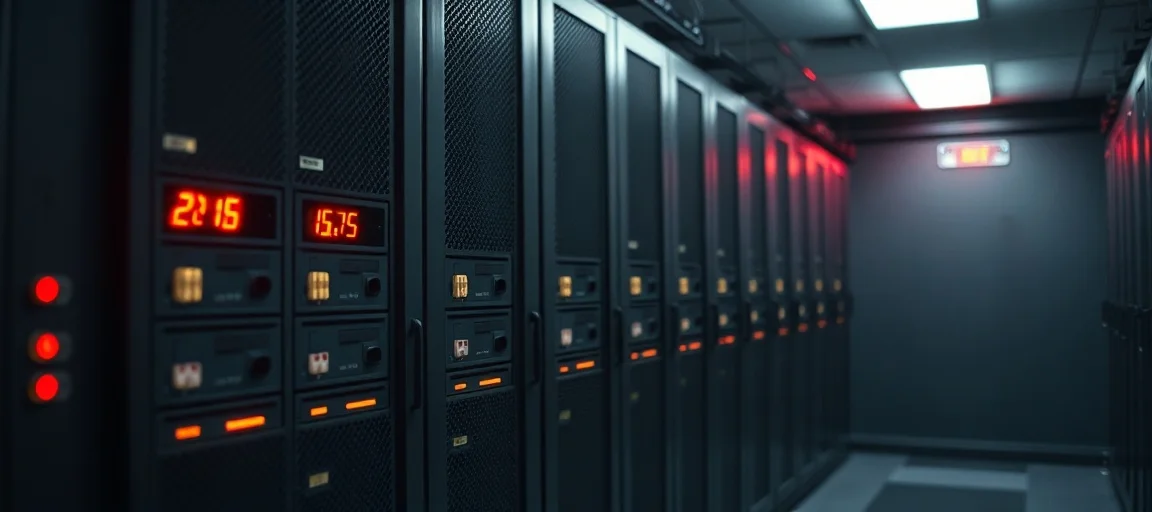
Unlike traditional systems requiring fixed camera angles and labeled datasets, Gemini Robotics-ER 1.6 uses transfer learning from 200,000+ simulated scenarios and real-world lab footage to recognize dials, gauges, and analog displays without pre-programming. The model fuses visual sensing with spatial reasoning to interpret needle positions, scale markings, and digital readouts in real time.
Revolutionizing Robotic Decision-Making
By integrating multimodal AI—combining vision, motor control, and contextual understanding—Gemini Robotics-ER 1.6 moves beyond reactive execution to proactive planning. Robots can now assess instrument states, predict trends (e.g., rising pressure), and adjust actions dynamically, enabling true autonomous navigation in human-centric spaces.
Real-World Applications in Labs and Factories
Industries facing high oversight costs are already testing this technology. Pharmaceutical labs use it to monitor batch conditions without human intervention. Aerospace assembly lines deploy it for real-time torque and voltage readings. Nuclear facilities rely on it for remote diagnostics, minimizing exposure risks. Deployment time drops by up to 70% compared to legacy systems.
Comparison with Previous Versions
Gemini Robotics-ER 1.6 builds on earlier models like ER 1.2, which required manual calibration for each new instrument. The 1.6 version eliminates template dependency through self-supervised learning from diverse visual patterns. Its accuracy in analog-to-digital translation improved from 82% to 98%, while processing speed increased by 40%.
Why This Is a Milestone in Embodied AI
This isn’t just an upgrade—it’s a paradigm shift. Gemini Robotics-ER 1.6 demonstrates that robots can understand context, not just execute commands. By mastering visual perception, sensor interpretation, and adaptive manipulation, it sets a new standard for generalist robotics. As DeepMind’s AI evolves, this model becomes the foundation for next-generation agents that learn from the physical world.