Data Centers Became a Lifeline During Winter Storm Fern
During Winter Storm Fern, data centers were tapped to provide crucial power through their backup generators, averting wider blackouts across the U.S. This emergency measure highlights the growing reliance on these facilities and prompts a reevaluation of their role in grid stability.

Data Centers Stepped Up as Emergency Power Sources During Winter Storm Fern
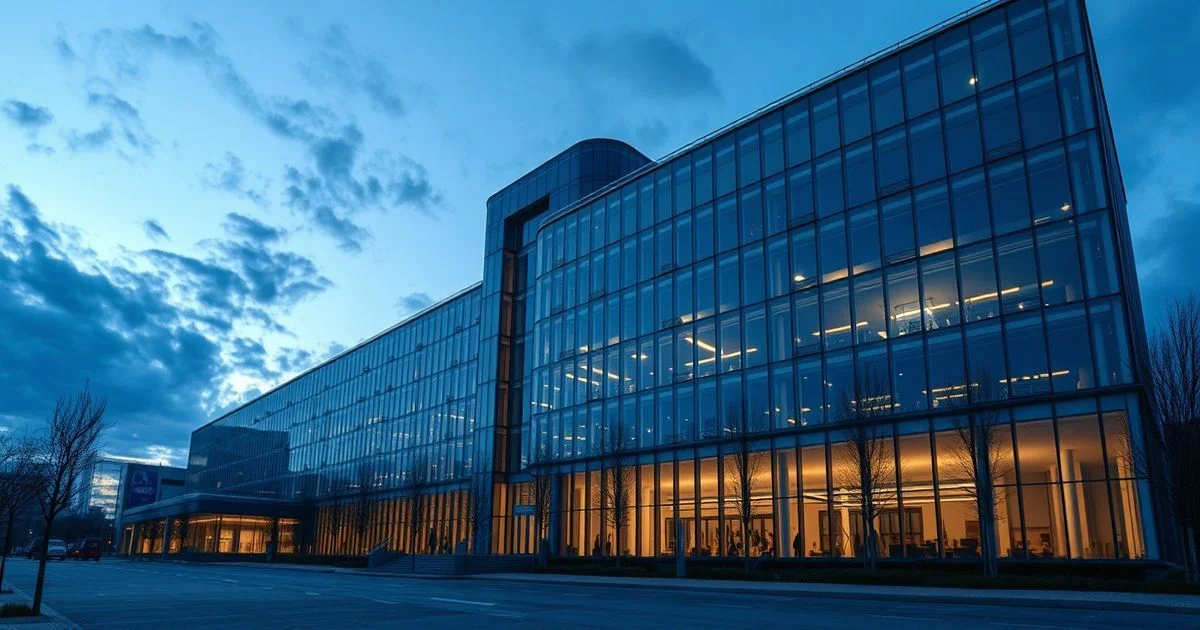
In the grip of the severe Winter Storm Fern in late January 2026, a crisis unfolded across the United States, leaving over a million individuals without power, predominantly in the southeastern regions. As freezing temperatures, ice, and snow descended, the nation's energy infrastructure was pushed to its limits. In a significant move to bolster the strained power grid, the U.S. Department of Energy authorized data centers and other large commercial energy consumers to activate their backup generators.
The nonprofit organization PJM, responsible for operating the power grid in the mid-Atlantic United States, had sought federal approval to increase power generation. This request came with the acknowledgment that such an increase might necessitate the use of dirtier fuels, potentially leading to elevated air pollution levels. Energy Secretary Chris Wright not only granted this permission but also expanded the directive to include ERCOT, which manages the Texas power grid, and Duke Energy, a major electricity provider in the Southeast.
The primary objective was to ensure a sufficient supply of electricity to meet the surging demand from a populace grappling with the storm's harsh conditions. Typically, data centers operate on their own power, not feeding surplus energy back into the public grid. However, as reported by the Wall Street Journal, Secretary Wright highlighted the substantial capacity of these facilities' "industrial diesel generators," estimating their potential to generate 35 gigawatts of power – an amount sufficient to power millions of homes.
The Escalating Energy Demands of Data Centers
Prior to Winter Storm Fern, the extent to which data centers might curtail their power consumption during emergencies remained an open question. This query is particularly pertinent given the escalating energy demands of these facilities, largely driven by the burgeoning field of generative artificial intelligence. As detailed in Fast Company, this AI boom is already contributing to rising electricity prices in densely utilized grids like PJM.
Projections indicate that data centers will continue to be a significant factor in overall electricity consumption. The Lawrence Berkeley National Lab anticipates a substantial increase in the share of U.S. electricity used by data centers, potentially rising from 4.4% in 2023 to between 6.7% and 12% by 2028. PJM, for instance, forecasts a peak load growth of 32 gigawatts by 2030, a figure nearly equivalent to supplying electricity for 30 million new homes, with the vast majority of this growth attributed to new data center developments. This puts PJM in the challenging position of coordinating this energy demand and determining fair cost allocations for the public and other stakeholders.
The rapid expansion of data centers and the concurrent search for adequate power sources have ignited considerable public concern. Residents are increasingly vocal about the potential for these power-hungry facilities to inflate household energy costs. Furthermore, a significant concern revolves around the environmental impact, with many data centers relying on natural gas generators. This reliance raises issues regarding air quality, water consumption, and the exacerbation of climate change, particularly as many proposed and existing data centers are situated in communities already contending with high pollution levels.
Efforts to mitigate these impacts are underway through various regulatory channels. Local ordinances, regulations established by state utility commissions, and proposed federal legislation aim to shield ratepayers from price hikes and ensure that data centers contribute financially to the necessary power generation and transmission infrastructure they require.
Rethinking 'Always-On' Power Connections
Beyond their overall energy consumption, many data centers have sought power connections from utility companies that guarantee near-constant availability, often requesting power reliability of 99.999% of the time. This pursuit of uninterrupted service contrasts with established utility practices, such as demand response programs, which have been encouraged since the 1970s. These programs incentivize large power consumers to reduce their electricity usage during peak demand periods, such as those experienced during Winter Storm Fern, in exchange for financial benefits like bill credits.
Historically, demand response programs have proven effective in helping utilities and grid managers manage electricity demand during critical summer and winter peaks. The widespread adoption of smart meters has also enabled residential customers and smaller businesses to participate in these initiatives. When combined with distributed energy resources like rooftop solar, battery storage, and electric vehicles, these resources can be aggregated to function as "virtual power plants," offering a more flexible and responsive energy supply.
A More Flexible Approach to Data Center Energy Consumption
The contractual agreements between data centers, local governments, and utilities often remain undisclosed to the public, making it challenging to ascertain their willingness and capacity to temporarily reduce power consumption during grid emergencies. While some critical data systems, such as those for medical records, financial transactions, and airline reservations, necessitate uninterrupted power, the explosive growth in data center demand fueled by the AI revolution is prompting a shift in perspective.
Developers are increasingly open to participating in demand response initiatives. For instance, Google announced in August 2025 new agreements with Indiana Michigan Power and the Tennessee Valley Authority to implement "data center demand response by targeting machine learning workloads." This involves strategically shifting non-urgent computational tasks away from periods of high grid strain. Concurrently, new companies are emerging with the specific mission of assisting AI data centers in managing workload flexibility and even leveraging in-house battery storage to temporarily disconnect from the grid during power shortages.
Paving the Way for a More Resilient Energy Future
Research suggests that if data centers embrace flexible power usage, the grid could accommodate an additional 100 gigawatts of capacity – enough to power approximately 70 million households – without the need for new generation and transmission infrastructure. Studies have also explored how data centers can invest in offsite generation through virtual power plants to meet their energy requirements. Deploying solar panels with battery storage at businesses and homes offers a more rapid and cost-effective means of increasing available electricity compared to constructing new, large-scale power plants.
Virtual power plants provide crucial flexibility, allowing grid operators to draw upon battery power, adjust thermostats, or temporarily shut down appliances during peak demand. These projects also yield benefits for the host buildings. The integration of distributed energy generation and storage, coupled with measures such as winterizing power lines and utilizing renewable energy sources, are identified as critical strategies for maintaining power supply during and after winter storms. These initiatives hold significant potential for communities like Nashville, Tennessee, where a substantial portion of the population experienced power outages during Winter Storm Fern, not due to a lack of overall electricity, but because of damage to power lines.
The future trajectory of the AI industry remains uncertain, with analysts cautioning that it could represent a speculative bubble. If demand for AI services plateaus, electricity customers might be left footing the bill for grid enhancements and new generation capacity built for needs that ultimately do not materialize. While onsite diesel generators offer an immediate emergency solution for large energy consumers like data centers to alleviate grid strain, they are not a sustainable long-term strategy for addressing the challenges posed by extreme weather events. A more comprehensive approach, involving data centers, utilities, regulators, and grid operators embracing offsite distributed energy solutions, could lead to lower energy prices, reduced environmental impact, and enhanced energy security for all, ensuring reliable power access through both heatwaves and cold snaps.