Amazon Shuts Down Blue Jay Robotics Project After Six Months Amid Strategic Shift
Amazon has abruptly halted development of its Blue Jay warehouse robotics project less than six months after its launch, surprising investors and industry observers. The company confirmed the technology will be repurposed for other robotics initiatives, with team members reassigned to ongoing efforts.

Amazon Shuts Down Blue Jay Robotics Project After Six Months Amid Strategic Shift
summarize3-Point Summary
- 1Amazon has abruptly halted development of its Blue Jay warehouse robotics project less than six months after its launch, surprising investors and industry observers. The company confirmed the technology will be repurposed for other robotics initiatives, with team members reassigned to ongoing efforts.
- 2Amazon has abruptly discontinued its Blue Jay robotics initiative, a highly publicized project aimed at revolutionizing warehouse automation, after less than six months of development.
- 3The decision, confirmed by company insiders and reported by multiple industry outlets, has sent ripples through the tech and logistics sectors.
psychology_altWhy It Matters
- check_circleThis update has direct impact on the Robotik ve Otonom Sistemler topic cluster.
- check_circleThis topic remains relevant for short-term AI monitoring.
- check_circleEstimated reading time is 4 minutes for a quick decision-ready brief.
Amazon has abruptly discontinued its Blue Jay robotics initiative, a highly publicized project aimed at revolutionizing warehouse automation, after less than six months of development. The decision, confirmed by company insiders and reported by multiple industry outlets, has sent ripples through the tech and logistics sectors. While Amazon has not issued a formal public statement, sources close to the project indicate the shutdown was driven by technical challenges and a strategic recalibration of the company’s robotics roadmap.
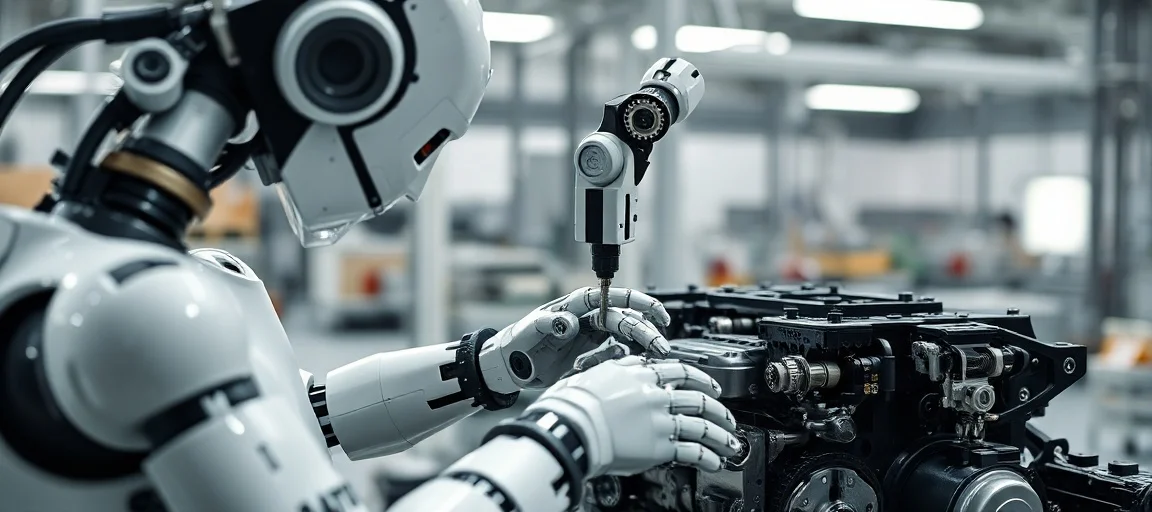
According to TipRanks, investors were left stunned by the sudden move, especially given the significant capital and talent invested in Blue Jay. The project, internally described as a next-generation mobile manipulation robot designed to handle irregularly shaped packages in fulfillment centers, was expected to debut in pilot facilities by early 2026. Instead, Amazon quietly pulled the plug, redirecting resources to more mature robotics programs such as Proteus and Kiva successors. The move underscores Amazon’s increasing focus on incremental innovation over high-risk, high-reward prototypes.
Business Insider reports that internal emails leaked to employees revealed that Blue Jay’s core perception and grasping algorithms — developed by a team of over 70 engineers and roboticists — were deemed technically viable but economically unsustainable at scale. The robot’s ability to reliably pick and pack items in cluttered, high-velocity warehouse environments fell short of Amazon’s required 99.5% accuracy threshold. While competitors like Ocado and DHL have achieved similar precision with more specialized, fixed-path systems, Blue Jay’s ambition to operate in unstructured environments proved too complex for current sensor and AI limitations.
Employees who worked on Blue Jay have been reassigned across Amazon’s Robotics division, with many joining teams focused on improving existing warehouse automation systems. Several senior engineers have reportedly moved to the company’s AI-driven inventory forecasting unit, suggesting Amazon is prioritizing predictive logistics over physical manipulation. This pivot aligns with broader internal trends: Amazon has increasingly emphasized software optimization, machine learning for demand prediction, and drone delivery logistics over physical robot overhauls in its 2025-2027 capital allocation plan.
Market analysts note that the failure of Blue Jay may signal a broader caution in Amazon’s approach to robotics. While the company has invested over $10 billion in automation since 2018, recent setbacks — including delays in Prime Air and the decommissioning of the Scout delivery robot — have prompted internal reviews. "Amazon is no longer betting on moonshots," said Dr. Elena Torres, robotics analyst at TechForward. "They’re now focused on ROI-driven scalability. Blue Jay was a brilliant prototype, but not a viable product."
The decision also raises questions about Amazon’s long-term robotics strategy. While the company continues to lead in warehouse automation with over 750,000 robotic units deployed globally, Blue Jay’s cancellation suggests it may be stepping back from attempting to replicate human dexterity in unstructured environments. Instead, Amazon appears to be doubling down on integration, efficiency, and cost reduction within its existing infrastructure.
Industry observers remain cautious but pragmatic. The shutdown of Blue Jay is not an indication of failure in innovation, but rather a sign of disciplined capital allocation. As Amazon navigates slowing e-commerce growth and heightened regulatory scrutiny, its ability to pivot quickly — even from promising projects — may prove more valuable than any single robotic breakthrough.