2026’s Breakthrough: Edge-First LLMs Power Autonomous Vehicles & Robotics
Next-gen physical AI is transforming autonomous vehicles and robotics through edge-first large language models, enabling real-time decision-making without cloud dependency. Experts say this shift is critical for safety, latency, and scalability in dynamic environments.

2026’s Breakthrough: Edge-First LLMs Power Autonomous Vehicles & Robotics
summarize3-Point Summary
- 1Next-gen physical AI is transforming autonomous vehicles and robotics through edge-first large language models, enabling real-time decision-making without cloud dependency. Experts say this shift is critical for safety, latency, and scalability in dynamic environments.
- 22026’s Breakthrough: Edge-First LLMs Power Autonomous Vehicles & Robotics Next-gen physical AI is being transformed by edge-first large language models (LLMs), enabling autonomous vehicles and humanoid robots to process sensor data in real time — without cloud dependency.
- 3This shift to on-device inference is no longer experimental: it’s the new standard for safety-critical autonomy in 2026.
psychology_altWhy It Matters
- check_circleThis update has direct impact on the Robotik ve Otonom Sistemler topic cluster.
- check_circleThis topic remains relevant for short-term AI monitoring.
- check_circleEstimated reading time is 3 minutes for a quick decision-ready brief.
2026’s Breakthrough: Edge-First LLMs Power Autonomous Vehicles & Robotics
Next-gen physical AI is being transformed by edge-first large language models (LLMs), enabling autonomous vehicles and humanoid robots to process sensor data in real time — without cloud dependency. This shift to on-device inference is no longer experimental: it’s the new standard for safety-critical autonomy in 2026.
How Edge-First LLMs Reduce Latency in Autonomous Driving
Traditional cloud-based AI introduces dangerous delays — often exceeding 200ms — making real-time decisions impossible in high-speed traffic. Edge-first LLMs, optimized for NVIDIA Thor and Qualcomm RB5 chips, now achieve under 50ms inference on vehicle-mounted hardware. This allows Tesla’s Autopilot and similar systems to interpret ambiguous road signs, pedestrian gestures, and weather-obscured signals with contextual reasoning previously only possible on servers.
Real-World Use Cases in Humanoid Robotics
Humanoid robots in elderly care and disaster zones now use distilled LLMs to understand natural language commands and infer intent from partial cues. These lightweight models run locally, enabling robots to navigate unstructured environments by combining sensor fusion (LiDAR, camera, radar) with semantic understanding. For example, a robot can respond to "Help me sit down" by analyzing posture, grip, and environmental hazards — all on-device.
Why Edge Computing Is Essential for Safety & Privacy
Cloud-dependent AI systems face risks: network outages, cyberattacks, and data leaks. Edge-first LLMs eliminate these threats by processing all sensory input — video, audio, LiDAR — locally. Sensitive data never leaves the device, ensuring compliance with GDPR and HIPAA. This resilience is critical for autonomous ambulances, emergency drones, and public transit systems.
Overcoming Hardware Limits: Quantization & Custom Silicon
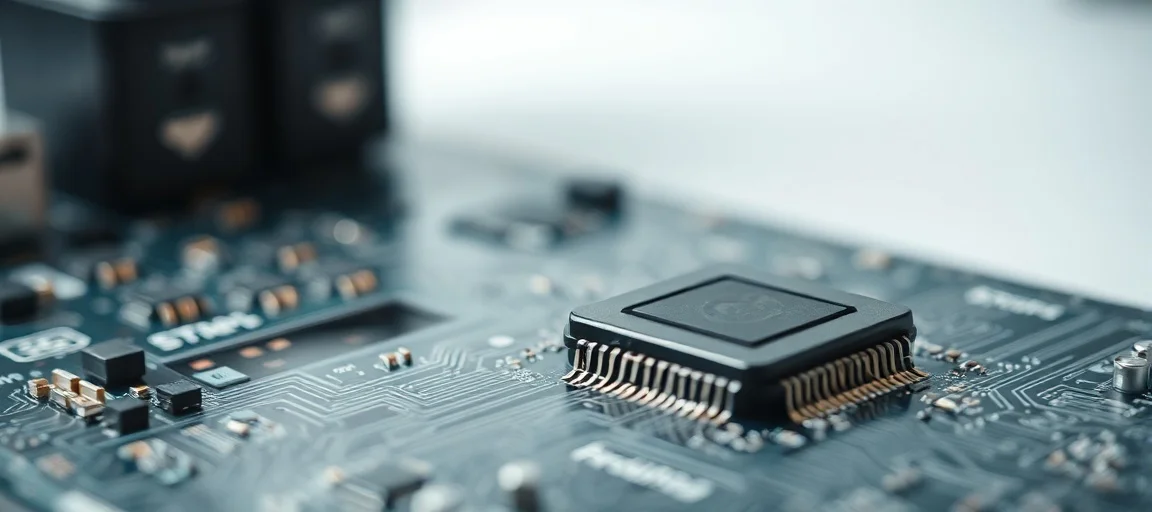
Training compact LLMs without losing semantic depth requires advanced techniques like quantization and knowledge distillation. Engineers are overcoming power and thermal constraints with custom AI accelerators. NVIDIA’s Thor chip and Qualcomm’s Robotics RB5 platform now deliver LLM inference at under 5W — making continuous, real-time reasoning feasible even in mobile robots.
The Future: Neuromorphic Hardware & Continual Learning
The next frontier blends edge-first LLMs with neuromorphic chips and continual learning systems. These architectures mimic human brain efficiency, adapting to new environments without retraining. In 2026, physical AI won’t rely on massive cloud models — it will thrive on lean, intelligent, self-improving agents operating autonomously in the real world.
Edge-first LLMs are not just improving autonomy — they’re redefining it. The future belongs to machines that reason locally, act instantly, and protect privacy by design.