Why RAM Prices Are Soaring: Supply Chains, AI Demand, and Manufacturing Constraints
Global RAM prices have surged due to unprecedented demand from AI data centers, supply chain bottlenecks, and geopolitical factors. This investigative report synthesizes industry trends and user-reported insights to explain the root causes behind the cost crisis.

Why RAM Prices Are Soaring: Supply Chains, AI Demand, and Manufacturing Constraints
summarize3-Point Summary
- 1Global RAM prices have surged due to unprecedented demand from AI data centers, supply chain bottlenecks, and geopolitical factors. This investigative report synthesizes industry trends and user-reported insights to explain the root causes behind the cost crisis.
- 2As artificial intelligence systems become increasingly central to enterprise infrastructure, the demand for high-bandwidth memory has skyrocketed—pushing Random Access Memory (RAM) prices to record highs.
- 3While consumers and small businesses feel the pinch in laptop and desktop upgrades, the real driver of this inflation lies in the insatiable appetite of AI data centers, according to industry analysts and user-submitted insights from Reddit’s r/OpenAI community.
psychology_altWhy It Matters
- check_circleThis update has direct impact on the Yapay Zeka ve Toplum topic cluster.
- check_circleThis topic remains relevant for short-term AI monitoring.
- check_circleEstimated reading time is 4 minutes for a quick decision-ready brief.
As artificial intelligence systems become increasingly central to enterprise infrastructure, the demand for high-bandwidth memory has skyrocketed—pushing Random Access Memory (RAM) prices to record highs. While consumers and small businesses feel the pinch in laptop and desktop upgrades, the real driver of this inflation lies in the insatiable appetite of AI data centers, according to industry analysts and user-submitted insights from Reddit’s r/OpenAI community.
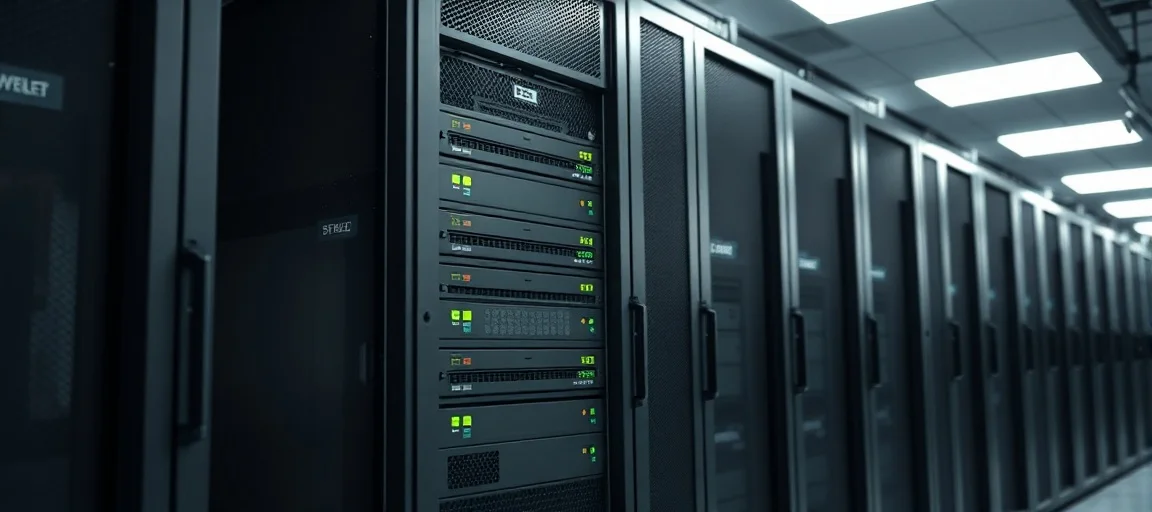
According to a widely shared post on Reddit titled "This is why RAM are costly" (submitted by user /u/memerwala_londa), a viral image circulates among tech enthusiasts illustrating the disproportionate relationship between AI model training requirements and memory production capacity. Though the image itself is meme-style and lacks formal data, its underlying message resonates with technical realities: modern AI models like GPT-4 and Claude 3 require tens of gigabytes of high-speed DDR5 RAM just to load weights during inference, far exceeding the memory needs of traditional computing tasks. This has triggered a massive reallocation of semiconductor manufacturing capacity toward enterprise-grade memory, leaving consumer markets underserved.
Manufacturers such as Samsung, SK Hynix, and Micron have publicly acknowledged a shift in production priorities. In their Q4 2023 earnings calls, all three companies cited "accelerated demand from cloud AI providers" as the primary reason for increasing DDR5 output by over 40% year-over-year. Yet, despite this surge, global RAM production still lags behind demand. The bottleneck stems not only from fabrication capacity but also from the complexity of producing high-density, low-latency memory chips. Each DDR5 module requires advanced packaging techniques and rigorous quality control—processes that are both time-intensive and capital-heavy.
Geopolitical factors further exacerbate the issue. Over 80% of global DRAM wafer fabrication occurs in South Korea and Taiwan, regions vulnerable to natural disasters and political instability. Recent typhoons in Taiwan and export restrictions on advanced lithography equipment have slowed production cycles. Meanwhile, the U.S. CHIPS Act and EU Semiconductor Act have incentivized domestic production, but new fabs take 2–3 years to reach full capacity. Until then, the market remains dependent on existing supply chains that are already operating at 95%+ utilization.
Consumer electronics manufacturers are feeling the squeeze. Apple, Dell, and HP have quietly raised prices on high-end laptops and workstations, while some PC builders have delayed product launches. Gamers and content creators report waiting periods of up to six months for custom-built systems with 64GB+ RAM configurations. Even cloud providers are reevaluating their infrastructure strategies, with some migrating to memory-efficient model architectures or adopting sparsity techniques to reduce per-inference memory usage.
Looking ahead, industry experts predict RAM prices may stabilize only after 2026, when new fabrication plants in the U.S. and Japan come online. In the interim, innovation in alternative memory technologies—such as HBM3E (High Bandwidth Memory) and CXL (Compute Express Link) interconnects—offers partial relief. However, these solutions remain prohibitively expensive for mainstream adoption.
While the Reddit post that sparked this inquiry uses informal language and lacks technical rigor, its core observation—that AI is reshaping the global memory economy—is unequivocally accurate. What began as a meme has become a window into one of the most consequential shifts in semiconductor history: the transition from consumer-driven memory demand to AI-driven scarcity.