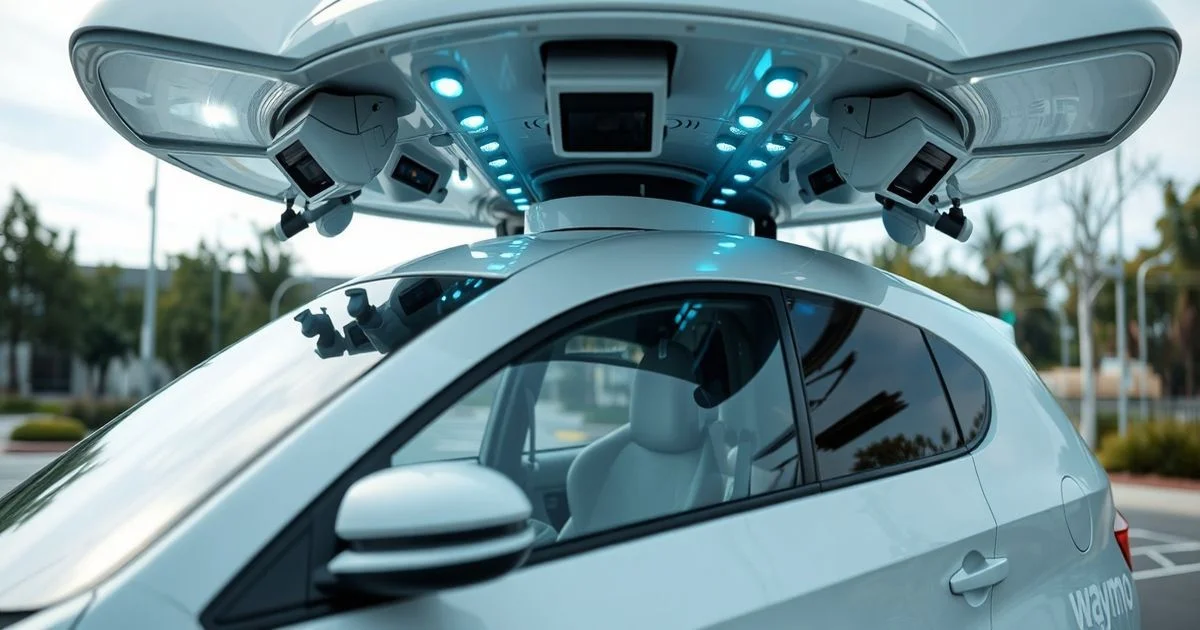
Waymo Leverages DeepMind's Genie 3 for Advanced Autonomous Driving Simulations
Alphabet's Waymo is integrating Google DeepMind's powerful Genie 3 AI model to generate novel driving scenarios for its autonomous vehicles. This strategic collaboration aims to accelerate the development of Waymo's self-driving technology by exposing its systems to a wider range of simulated experiences.

MOUNTAIN VIEW, CA – Waymo, the autonomous driving subsidiary of Alphabet, is significantly enhancing its simulation capabilities by integrating Google DeepMind's advanced AI model, Genie 3. This strategic move, reported by The Decoder, allows Waymo to generate complex and entirely novel driving scenarios that its vehicles have not yet encountered in the real world.
The core of this advancement lies in the synergy between Waymo's extensive real-world driving data and DeepMind's sophisticated world model, Genie 3. By feeding Waymo's empirical data into Genie 3, the AI can extrapolate and create an almost limitless variety of potential driving situations. This capability is crucial for training and validating autonomous driving systems, as it allows them to prepare for edge cases and unpredictable events that are difficult to replicate through traditional data collection or manual scenario creation.
Waymo has long positioned itself as a leader in the autonomous vehicle space, striving to be "the world's most trusted driver." As detailed on their official website (waymo.com), the company has already served over 20 million rides with a reported 93% satisfaction rate. Their service is available 24/7 across numerous cities in the United States, including San Francisco, Los Angeles, Phoenix, and New York, with international operations in Tokyo and London. This expansion of operational areas underscores the need for robust and continuously evolving simulation environments.
The integration of Genie 3 represents a significant leap in how autonomous driving simulations are developed. Traditionally, simulations relied heavily on replaying past driving data or meticulously crafting specific scenarios. However, Genie 3, as highlighted by eWeek, is capable of generating diverse "world tours" within seconds, suggesting a powerful ability to create rich and varied environments. This means Waymo can now expose its autonomous driving software to an unprecedented diversity of traffic conditions, pedestrian behaviors, weather patterns, and unexpected road events in a safe, virtual setting.
"By combining Waymo's real-world driving data with Deepmind's Genie 3, Alphabet is showing the kind of AI leverage that few companies can match: using one subsidiary's world model to supercharge another's autonomous driving simulations," The Decoder noted. This internal synergy within Alphabet allows for a more efficient and effective development cycle, accelerating the company's mission to make transportation safer, more accessible, and more sustainable.
Waymo's commitment to advancing its autonomous driving technology is evident in its continuous efforts to refine its "Waymo Driver." The company emphasizes its technological prowess, describing its system as "The World's Most Experienced Driver™." Their 'About' section (waymo.com/about/) details their mission and history, highlighting a dedication to rigorous testing and development. The use of Genie 3 is a testament to this dedication, providing a novel and powerful tool to push the boundaries of what autonomous vehicles can safely and reliably achieve.
The implications of this collaboration extend beyond just improving Waymo's current fleet. By simulating a wider array of challenging scenarios, Waymo can proactively identify and address potential weaknesses in its AI before its vehicles encounter them on public roads. This approach is critical for building public trust and ensuring the highest levels of safety as autonomous vehicles become more prevalent in society.