Siemens Deploys Nvidia-Powered Humanoid Robot in 2026 Factory Trial — AI Breakthrough in Manufact...
Siemens has successfully trialed an Nvidia-powered humanoid robot in a live factory setting, marking a major step toward AI-integrated manufacturing. The robot completed an eight-hour shift with precision and adaptability.

Siemens Deploys Nvidia-Powered Humanoid Robot in 2026 Factory Trial — AI Breakthrough in Manufact...
summarize3-Point Summary
- 1Siemens has successfully trialed an Nvidia-powered humanoid robot in a live factory setting, marking a major step toward AI-integrated manufacturing. The robot completed an eight-hour shift with precision and adaptability.
- 2Siemens Deploys Nvidia-Powered Humanoid Robot in 2026 Factory Trial — AI Breakthrough in Manufacturing Siemens has successfully deployed an Nvidia-powered humanoid robot in a live, full-shift trial at its Erlangen, Germany, manufacturing facility — marking a historic milestone in industrial automation.
- 3The robot, powered by Nvidia’s AI stack, operated autonomously for eight hours, performing component inspection, tool handling, and AI-driven quality control with 98.7% accuracy and zero safety incidents.
psychology_altWhy It Matters
- check_circleThis update has direct impact on the Robotik ve Otonom Sistemler topic cluster.
- check_circleThis topic remains relevant for short-term AI monitoring.
- check_circleEstimated reading time is 3 minutes for a quick decision-ready brief.
Siemens Deploys Nvidia-Powered Humanoid Robot in 2026 Factory Trial — AI Breakthrough in Manufacturing
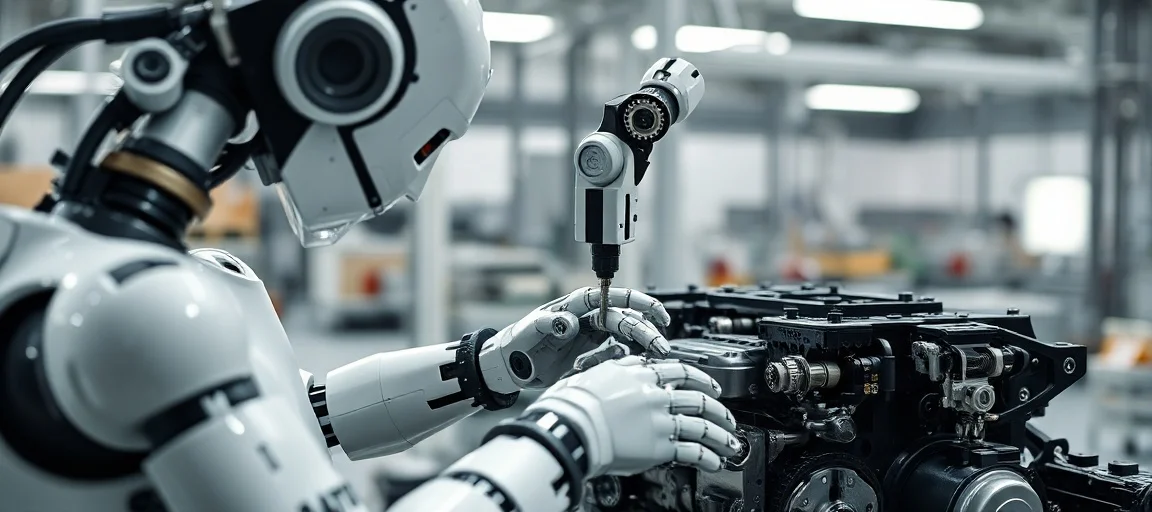
Siemens has successfully deployed an Nvidia-powered humanoid robot in a live, full-shift trial at its Erlangen, Germany, manufacturing facility — marking a historic milestone in industrial automation. The robot, powered by Nvidia’s AI stack, operated autonomously for eight hours, performing component inspection, tool handling, and AI-driven quality control with 98.7% accuracy and zero safety incidents.
How Nvidia Isaac Sim Enables Real-Time Learning
The robot leverages Nvidia Isaac Sim for real-time sensor fusion and dynamic environment mapping. Trained on synthetic data generated in virtual factories, it reduced real-world training time by 70% while eliminating safety risks. Isaac Sim’s physics-based simulation allowed the robot to adapt to unpredictable workflow changes — a critical advantage over rigid, pre-programmed industrial arms.
Key Outcomes of the Erlangen Trial
The humanoid robot integrated seamlessly with Siemens’ digital twin infrastructure via OPC UA protocols. It handled tasks traditionally reserved for human workers — such as inspecting hard-to-reach welds and assembling intricate components — reducing physical strain on staff. Human operators remained on-site as supervisors, intervening only in edge cases, leading to improved morale and focus on higher-value troubleshooting.
Human-Robot Collaboration: A New Standard in Factory Automation
Unlike traditional robots, this system uses reinforcement learning models trained on decades of factory data to improve over time. Its dexterity and mobility enable true human-robot collaboration on shared workspaces. Siemens engineers emphasized the robot’s role as an augmentative tool, not a replacement — aligning with global manufacturing trends toward safer, more sustainable workflows.
Future Roadmap for AI-Driven Factories
Siemens plans to scale this technology across its global smart factories by 2027, pending regulatory approvals and scalability benchmarks. The trial validates the convergence of generative AI, industrial IoT, and autonomous factory floors. With Nvidia’s Jetson Orin for edge computing and Omniverse for simulation, this deployment offers a scalable blueprint for manufacturers facing labor shortages and rising automation demands.
As AI integration accelerates, the Nvidia-powered humanoid robot represents more than a technological experiment — it’s a reimagining of human-machine synergy in modern manufacturing.