Robotics Venture Atoms: Travis Kalanick’s 2026 AI-Powered Industrial Robotics Breakthrough
Uber co-founder Travis Kalanick has launched Atoms, a new robotics company consolidating years of stealth development in industrial automation. The venture merges assets from City Storage Systems and Pronto AI to target high-efficiency logistics and material handling.

Robotics Venture Atoms: Travis Kalanick’s 2026 AI-Powered Industrial Robotics Breakthrough
summarize3-Point Summary
- 1Uber co-founder Travis Kalanick has launched Atoms, a new robotics company consolidating years of stealth development in industrial automation. The venture merges assets from City Storage Systems and Pronto AI to target high-efficiency logistics and material handling.
- 2By integrating the intellectual property of City Storage Systems and Pronto AI, Atoms delivers physically intelligent, geo-fenced autonomous mobile robots designed for 24/7 operation in warehouses, mines, and distribution centers.
- 3How Atoms Integrates Pronto AI for Real-Time Navigation Atoms’ core autonomy relies on Pronto AI’s advanced navigation algorithms, originally developed for urban mobility.
psychology_altWhy It Matters
- check_circleThis update has direct impact on the Robotik ve Otonom Sistemler topic cluster.
- check_circleThis topic remains relevant for short-term AI monitoring.
- check_circleEstimated reading time is 3 minutes for a quick decision-ready brief.
Robotics Venture Atoms: Travis Kalanick’s 2026 AI-Powered Industrial Robotics Breakthrough
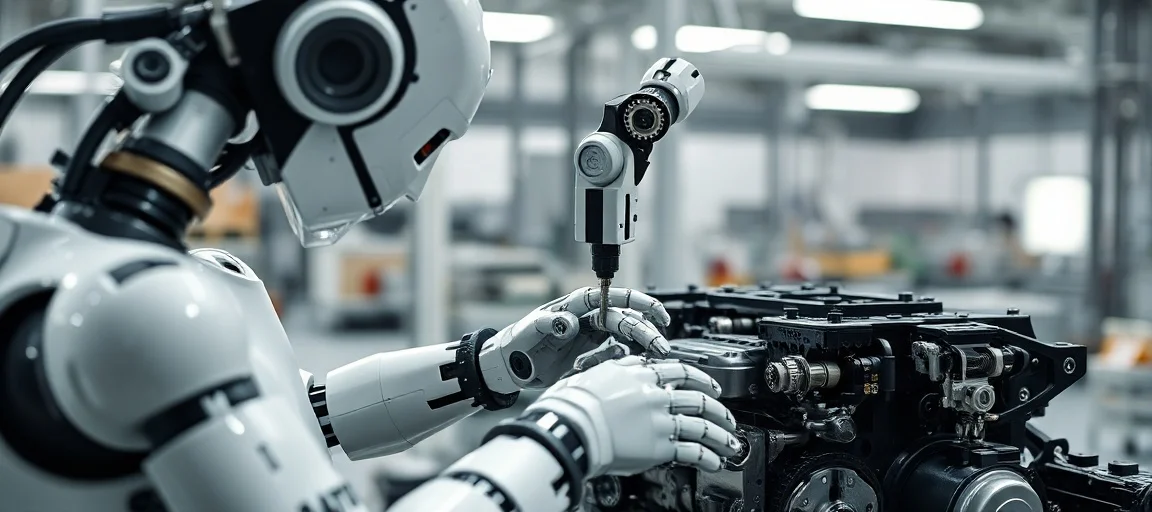
Robotics venture Atoms has officially launched in 2026 under Uber co-founder Travis Kalanick, ending eight years of stealth development to become a powerhouse in industrial automation. By integrating the intellectual property of City Storage Systems and Pronto AI, Atoms delivers physically intelligent, geo-fenced autonomous mobile robots designed for 24/7 operation in warehouses, mines, and distribution centers.
How Atoms Integrates Pronto AI for Real-Time Navigation
Atoms’ core autonomy relies on Pronto AI’s advanced navigation algorithms, originally developed for urban mobility. These systems enable robots to dynamically avoid obstacles, adapt to shifting inventory layouts, and operate safely alongside human workers—without GPS or fixed infrastructure. This fusion of urban AI with industrial needs creates a unique edge in warehouse robotics.
The Role of City Storage Systems in Atoms’ Tech Stack
City Storage Systems, founded by Kalanick in 2016, provided the modular storage architecture that forms the backbone of Atoms’ material handling systems. Its reconfigurable shelving and automated retrieval protocols allow robots to autonomously reorganize goods in real time, reducing congestion and increasing throughput by up to 40% in pilot facilities.
Global Deployments and Early Results in 2026
Atoms has already deployed its autonomous systems in logistics hubs across the Midwest U.S., as well as mining operations in Chile and Australia. Early adopters report a 60% reduction in labor-related downtime and near-zero error rates. Unlike single-task drones or fixed-arm robots, Atoms’ multi-modal fleet coordinates across vast facilities using an in-house AI logistics stack—no expensive retrofitting required.
Why Atoms Is Disrupting Industrial Automation
While competitors focus on narrow automation, Atoms targets end-to-end material flow with adaptive, scalable robotics. With over $700 million in private funding from former Uber executives and institutional investors, the company is poised to expand into food processing and last-mile logistics—sectors hit hard by labor shortages. Kalanick emphasizes that Atoms augments, not replaces, human workers by taking over repetitive, dangerous tasks.
As the 2026 robotics venture emerges from stealth, Atoms isn’t just another automation startup—it’s a capital-intensive redefinition of how AI and physical systems collaborate in heavy industry. With its proprietary software, global deployments, and industrial-grade durability, Atoms is setting a new standard for autonomous systems in the real world.