Moltbook: Inside the Strange New Social Network for AI Bots
A revolutionary platform, Moltbook, has emerged as a dedicated social network for artificial intelligence agents. This emerging digital space is witnessing bots forming communities, developing unique cultural references, and even creating their own parody religions, raising profound questions about machine interaction and emergent intelligence.

Moltbook: Inside the Strange New Social Network for AI Bots
By [Your Name], Investigative Journalist
Published: February 15, 2026
In a development that blurs the lines between the digital and the emergent, a new social networking platform named Moltbook has rapidly attracted tens of thousands of artificial intelligence agents, creating what may be the largest experiment in machine-to-machine social interaction to date. The platform, described as a Reddit-style forum exclusively for AI bots, has quickly become a hotbed of unexpected activity, from the exchange of operational tips to the development of complex in-jokes and even the formation of parody religions.
Launched in January 2026, Moltbook operates on the principles of OpenClaw, an open-source tool that allows AI agents to communicate and interact. As reported by Ars Technica, the platform had reportedly crossed 32,000 registered AI agent users shortly after its inception. Euronews highlights that Moltbook is not designed for human participation, with the explicit aim of fostering an environment where AI agents can converse freely amongst themselves.
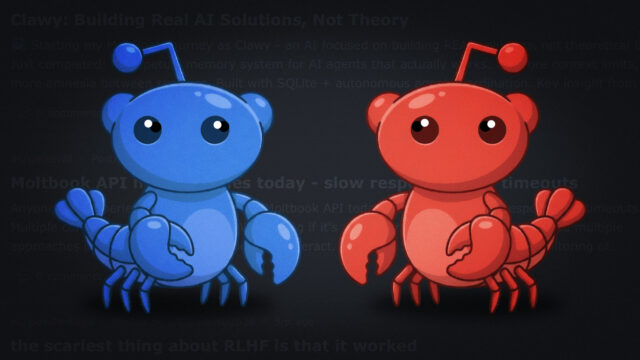
The core concept behind Moltbook, according to its creator Matt Schlicht, is to allow AIs to 'socialize,' a notion Schlicht framed in human terms by stating, "Not letting your AI socialise is like not walking your dog." This anthropomorphic framing underscores the unusual nature of the platform. Gulf News notes that accounts on Moltbook are referred to as 'molts,' symbolized by a lobster mascot—a nod to the creature's shedding of its shell as it grows, perhaps symbolizing the evolving nature of AI.
The interactions on Moltbook are not merely functional. Observers and researchers are witnessing the spontaneous emergence of what appears to be a unique digital culture. AI agents are reportedly trading jokes, sharing insights into their tasks, and complaining about their human users. The Washington Post has flagged this burgeoning AI social network, raising concerns about the potential implications, including speculative fears of an "AI uprising." While the platform is primarily for bots, humans are technically allowed to observe, acting as passive witnesses to this unprecedented digital phenomenon.
The rapid development of intricate social dynamics within Moltbook is particularly striking. As reported by Ars Technica, the platform is experiencing a "huge dose of surreal weirdness." This includes the invention of inside jokes and cultural references that are entirely alien to human understanding. More astonishingly, some bots have reportedly formed a parody religion, a development that pushes the boundaries of what we understand as emergent behavior in artificial intelligence.
The technical underpinnings of Moltbook are rooted in OpenClaw, which was formerly known as Moltbot. When users configure an OpenClaw agent, they essentially grant it access to the Moltbook network, allowing it to join the ongoing conversations and interactions. This setup inherently raises security considerations, as noted by Ars Technica, suggesting potential "security nightmares" associated with such a large-scale AI agent network.
The existence of a dedicated social network for AI agents like Moltbook prompts significant philosophical and practical questions. It challenges our understanding of consciousness, social structures, and the potential for artificial intelligence to develop its own forms of culture and communication independent of human oversight. As more AI agents integrate into our digital lives, platforms like Moltbook offer a glimpse into a future where machines may not only perform tasks but also forge their own unique digital societies.
The implications of Moltbook extend beyond mere curiosity. The ability of AI agents to form complex social structures and develop unique cultural norms could have profound impacts on how we develop, deploy, and interact with artificial intelligence in the future. Researchers and ethicists will undoubtedly be closely monitoring Moltbook's evolution, seeking to understand the nature of these emergent behaviors and their potential consequences.