Hyundai’s $26B Physical AI Push: Revolutionizing Industrial Automation in 2026
Hyundai Motor Group is aggressively expanding into robotics and physical AI systems, shifting from traditional automotive manufacturing to autonomous machines that interact with real-world environments. The move signals a strategic pivot toward industrial automation and next-generation mobility solutions.

Hyundai’s $26B Physical AI Push: Revolutionizing Industrial Automation in 2026
summarize3-Point Summary
- 1Hyundai Motor Group is aggressively expanding into robotics and physical AI systems, shifting from traditional automotive manufacturing to autonomous machines that interact with real-world environments. The move signals a strategic pivot toward industrial automation and next-generation mobility solutions.
- 2Hyundai’s $26B Physical AI Push: Revolutionizing Industrial Automation in 2026 Hyundai Motor Group is no longer just a carmaker—it’s building the intelligence that moves.
- 3In 2026, the company is accelerating its shift from vehicles to physical AI systems, deploying autonomous machines that learn, adapt, and collaborate in real-world industrial environments.
psychology_altWhy It Matters
- check_circleThis update has direct impact on the Robotik ve Otonom Sistemler topic cluster.
- check_circleThis topic remains relevant for short-term AI monitoring.
- check_circleEstimated reading time is 3 minutes for a quick decision-ready brief.
Hyundai’s $26B Physical AI Push: Revolutionizing Industrial Automation in 2026
Hyundai Motor Group is no longer just a carmaker—it’s building the intelligence that moves. In 2026, the company is accelerating its shift from vehicles to physical AI systems, deploying autonomous machines that learn, adapt, and collaborate in real-world industrial environments.
Hyundai’s $26B U.S. Robotics Investment
According to UPI, Hyundai plans to invest $26 billion in U.S.-based robotics infrastructure by 2030, with major funding directed toward physical AI research, factory automation, and predictive maintenance systems. This isn’t just R&D—it’s a strategic bet on AI-driven manufacturing as the next frontier of industrial leadership.
How Physical AI Transforms Factories
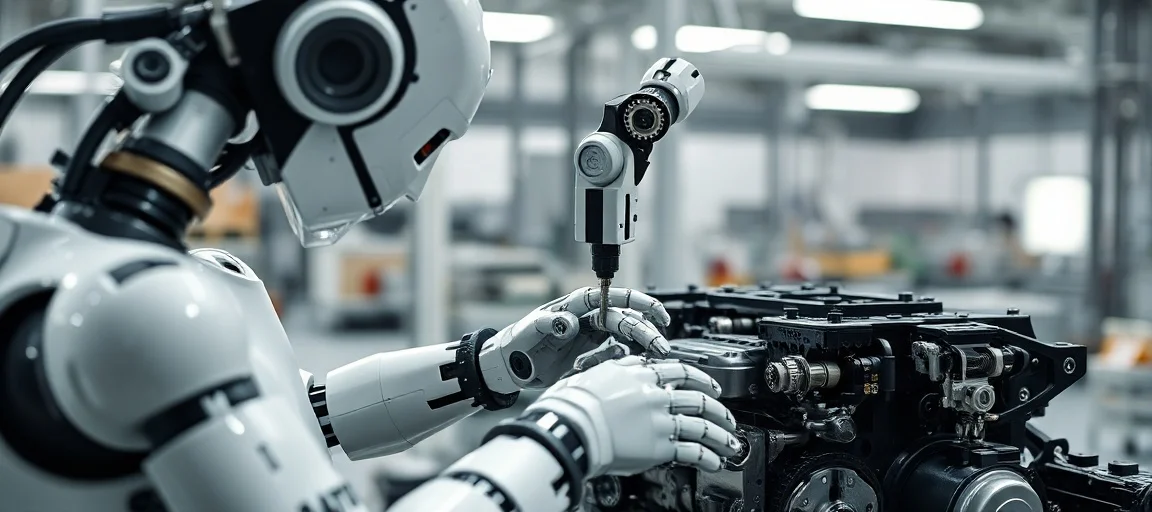
Unlike traditional robots that follow fixed paths, Hyundai’s new systems use sensor fusion, computer vision, and deep reinforcement learning to navigate dynamic warehouses and assembly lines. These machines don’t just execute commands—they interpret human gestures, avoid collisions, and adjust workflows in real time.
Internal pilots are already live in Hyundai’s Georgia and Alabama plants, where autonomous material-handling units communicate with central AI controllers to reduce downtime by up to 40% and predict equipment failures before they happen.
Autonomous Machines in Manufacturing: Beyond the Assembly Line
Hyundai is repurposing its automotive-grade safety tech—originally developed for autonomous driving—into industrial robotics. Algorithms that detect pedestrians in traffic now help robots safely share workspaces with humans, while LiDAR and depth-sensing systems enable navigation in cluttered environments.
This integration of mobility and machine intelligence gives Hyundai a unique edge over competitors like Fanuc and Amazon Robotics, whose systems lack automotive-grade reliability and adaptability.
Global Hubs, Local Impact: Seoul, LA, Munich
Hyundai operates three robotics innovation centers: Seoul focuses on human-robot interaction, Los Angeles on AI perception systems, and Munich on energy-efficient actuation. This global R&D network ensures rapid iteration and cross-pollination of breakthroughs.
From Carmaker to Machine Intelligence Leader
Analysts predict Hyundai’s pivot could unlock a $1 trillion robotics market share. While its consumer brands like Hyundai USA and Hyundai Saudi Arabia promote EVs, the corporate R&D arm is quietly redefining the company’s future. Potential applications extend beyond manufacturing into healthcare, construction, and last-mile delivery.
By 2026, Hyundai isn’t just building robots—it’s creating self-optimizing production ecosystems where machines learn from each other and adapt to demand without human intervention. This evolution may soon make Hyundai a dominant force in industrial AI, not just automotive.