Humanoid Robot Deployment in China Surges to 500+ Units in 2026 Amid Robot-Friendly Workplaces
Humanoid robot deployment in China is accelerating rapidly as companies leverage robot-friendly work environments to gather real-world data and refine applications. This shift from prototype to commercialization marks a turning point in global robotics.

Humanoid Robot Deployment in China Surges to 500+ Units in 2026 Amid Robot-Friendly Workplaces
summarize3-Point Summary
- 1Humanoid robot deployment in China is accelerating rapidly as companies leverage robot-friendly work environments to gather real-world data and refine applications. This shift from prototype to commercialization marks a turning point in global robotics.
- 2By early 2026, over 500 humanoid robots are actively working in factories, logistics hubs, and retail spaces across Guangdong, Shanghai, and Zhejiang, according to industry reports.
- 3Unlike global competitors chasing consumer-facing roles, Chinese firms are prioritizing industrial automation with a pragmatic, data-driven approach.
psychology_altWhy It Matters
- check_circleThis update has direct impact on the Robotik ve Otonom Sistemler topic cluster.
- check_circleThis topic remains relevant for short-term AI monitoring.
- check_circleEstimated reading time is 2 minutes for a quick decision-ready brief.
Humanoid Robot Deployment in China Surges to 500+ Units in 2026 Amid Robot-Friendly Workplaces
Humanoid robot deployment in China is no longer experimental—it’s operational. By early 2026, over 500 humanoid robots are actively working in factories, logistics hubs, and retail spaces across Guangdong, Shanghai, and Zhejiang, according to industry reports. Unlike global competitors chasing consumer-facing roles, Chinese firms are prioritizing industrial automation with a pragmatic, data-driven approach.
How Chinese Factories Are Adopting Humanoids
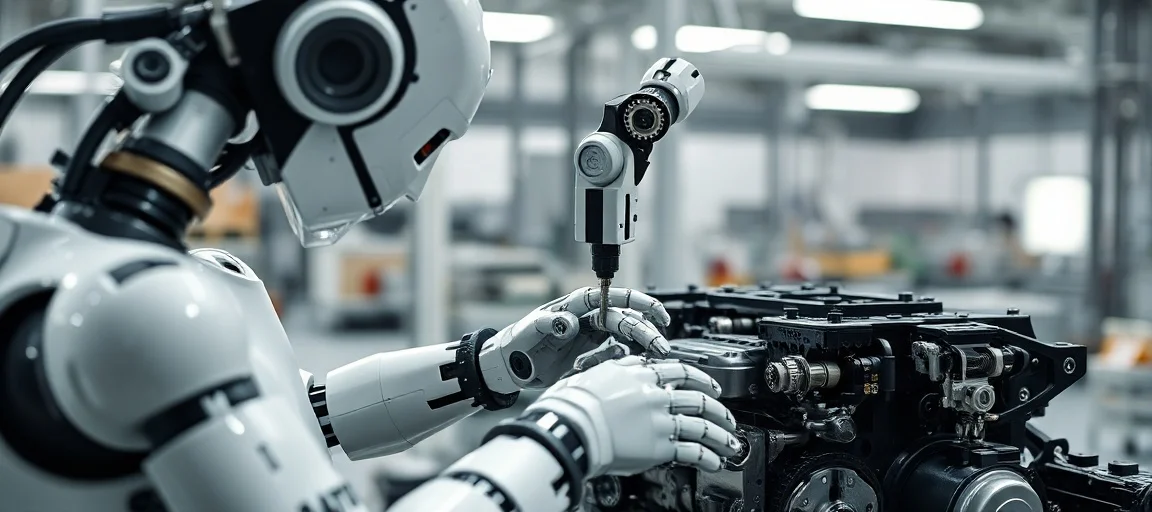
Manufacturing sites are being redesigned as robot-friendly environments: doorways widened, sensor networks calibrated, and workflows restructured for seamless human-robot collaboration. These aren’t isolated pilots; they’re scaled deployments where robots handle repetitive tasks like component inspection and inventory sorting with error rates below 2%.
Data-Driven Learning in Real-World Environments
Each deployed robot generates terabytes of operational data daily, feeding AI training models that refine motor control, object recognition, and decision-making. This closed-loop system has compressed development cycles from years to months, enabling rapid iteration without lab constraints.
Policy and Culture Fueling Automation Adoption
China’s regulatory sandbox allows live testing without bureaucratic delays—a stark contrast to Europe and the U.S. Combined with state-backed funding and public openness to machine integration, this creates ideal conditions for automation adoption. Venture capital inflows into humanoid robotics doubled year-over-year in 2025.
Parallels to China’s Electric Vehicle Success
Just as BYD and VinFast dominated urban EV markets by tailoring vehicles to high-density cities, Chinese robotics firms customize humanoid designs for specific workplace conditions—narrow aisles, mixed human-robot teams, and 24/7 operations. The result? A robotic workforce that learns by doing, not just simulating.
The Next Frontier: Hospitals, Airports, and Customer Service
With industrial foundations solidified, humanoid robots are now being tested in hospitals for patient logistics and airports for wayfinding. But the real innovation isn’t in flashy demos—it’s in quiet, continuous optimization inside robot-friendly environments.
By 2026, China is setting the global standard for commercial robotics—not through theoretical breakthroughs, but through relentless, data-backed adaptation. The future of AI-powered humanoid deployment isn’t coming—it’s already here, working quietly on factory floors across the nation.