Detachable Robotic Hand Mimics 'Thing' for Dexterous Grasping
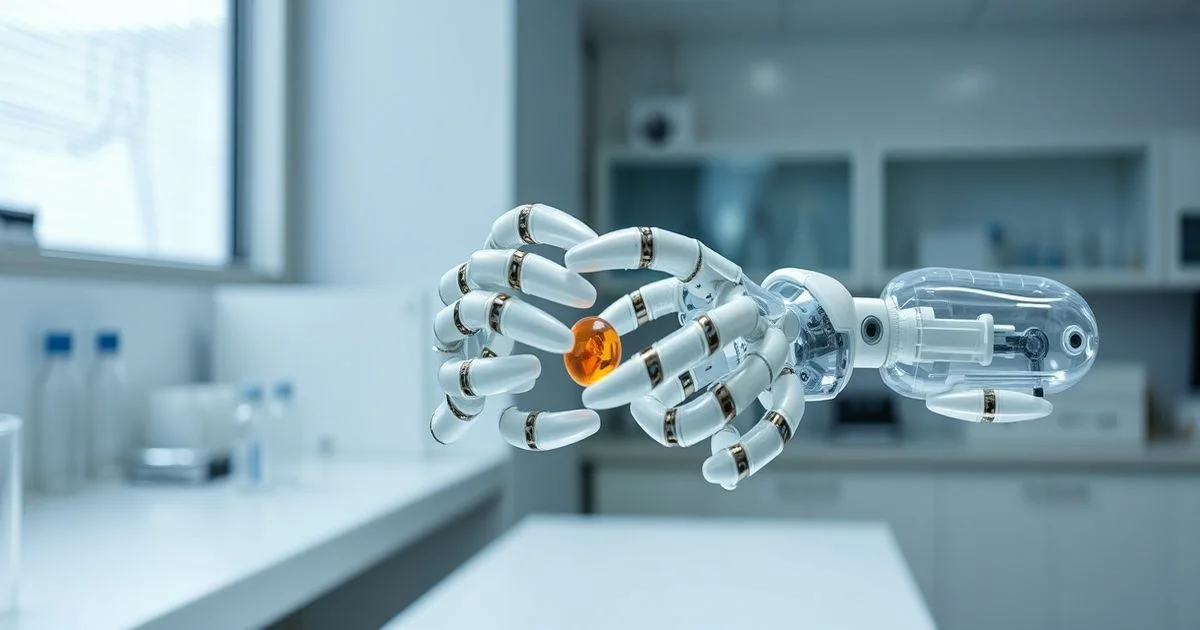
A novel robotic hand, capable of detaching from its arm and exhibiting remarkable dexterity, is drawing comparisons to the iconic 'Thing' from 'The Addams Family.' Its unique design allows for ultra-flexible crawling and grasping, opening new avenues in robotics.

Detachable Robotic Hand Mimics 'Thing' for Dexterous Grasping
In a development that blurs the lines between science fiction and reality, researchers have unveiled a groundbreaking robotic hand that possesses an almost sentient ability to detach and navigate its environment. Drawing uncanny parallels to the beloved disembodied hand 'Thing' from 'The Addams Family,' this innovative creation promises to redefine robotic manipulation and mobility.
The core innovation lies in the hand's extraordinary flexibility. As detailed by SingularityHub, each individual finger on this robotic appendage can bend backward, a feature that enables it to perform an "ultra-flexible crawling and grasping" motion. This capability allows the hand to maneuver in ways previously thought impossible for mechanical prosthetics or robotic manipulators.
While specific details on the underlying technology are still emerging, the implications are vast. The ability for a robotic extremity to operate autonomously, even after separation from its primary appendage, suggests potential applications ranging from intricate surgical procedures to advanced exploration in confined or hazardous spaces. Live Science has consistently highlighted the rapid advancements in the field of robotics, covering everything from the strangest robotic creations to the potential impact of artificial intelligence on our future. This detachable hand fits squarely within that narrative of continuous innovation.
Further underscoring the advancements in robotic dexterity, MIT News has reported on related developments. For instance, a previous report detailed a "vine-inspired robotic gripper" designed to gently lift both heavy and fragile objects. This points to a broader trend in robotics research focused on creating manipulators that can handle delicate tasks with precision, a capability that this new detachable hand could potentially augment.
The symmetrical design of the robotic hand, which enables a "spiderlike grasping" capability, as noted by a report from Letsdatascience.com (though access to the full article was restricted), suggests a sophisticated approach to object interaction. Such symmetrical designs often allow for a more even distribution of force and a wider range of grip configurations, essential for securely holding diverse objects.
Beyond the physical capabilities, the concept of a detached, mobile robotic appendage raises intriguing questions about the future of human-robot interaction and the potential for robots to perform tasks in highly distributed or cooperative ways. MIT News has also featured research into agile robotic insects, hinting at the growing interest in creating small, mobile robotic agents capable of complex actions. This detachable hand, with its unique crawling and grasping abilities, could represent a significant step towards such advanced robotic autonomy.
The development of this robotic hand represents a significant leap forward in the field of soft robotics and dexterous manipulation. Its ability to detach and move independently, coupled with its flexible grasping capabilities, not only evokes a popular culture icon but also unlocks a spectrum of new possibilities for how robots can interact with and operate within our world. As research in robotics continues to accelerate, as chronicled by publications like Live Science and MIT News, we can expect to see even more astonishing innovations that challenge our perceptions of what machines can do.