BCI Startup Unveils AI Bionic Hand That Surpasses Human Dexterity (2026)
A Chinese brain-computer interface unicorn is pioneering next-generation robotic prosthetics, aiming to surpass human dexterity with AI-enhanced bionic hands. The company's breakthrough could redefine rehabilitation and industrial robotics.

BCI Startup Unveils AI Bionic Hand That Surpasses Human Dexterity (2026)
summarize3-Point Summary
- 1A Chinese brain-computer interface unicorn is pioneering next-generation robotic prosthetics, aiming to surpass human dexterity with AI-enhanced bionic hands. The company's breakthrough could redefine rehabilitation and industrial robotics.
- 2This next-generation neuroprosthetic, still operating under wraps, leverages real-time neural decoding and adaptive machine learning to translate thought into motion—without muscle signals or external controllers.
- 3How BCI Technology Enables Real-Time Prosthetic Control The system captures micro-neural signals from the motor cortex via non-invasive scalp sensors or implanted arrays.
psychology_altWhy It Matters
- check_circleThis update has direct impact on the Robotik ve Otonom Sistemler topic cluster.
- check_circleThis topic remains relevant for short-term AI monitoring.
- check_circleEstimated reading time is 3 minutes for a quick decision-ready brief.
BCI Startup Unveils AI Bionic Hand That Surpasses Human Dexterity (2026)
A Chinese brain-computer interface (BCI) unicorn has unveiled a breakthrough AI-driven bionic hand capable of outperforming human dexterity in both medical and industrial settings. This next-generation neuroprosthetic, still operating under wraps, leverages real-time neural decoding and adaptive machine learning to translate thought into motion—without muscle signals or external controllers.
How BCI Technology Enables Real-Time Prosthetic Control
The system captures micro-neural signals from the motor cortex via non-invasive scalp sensors or implanted arrays. These signals are decoded by proprietary AI models trained on millions of movement patterns, enabling sub-100ms response times.
In clinical trials with upper-limb amputees, users successfully performed delicate tasks like picking up an egg, threading a needle, or handling fragile glassware—matching or exceeding natural hand precision.
AI vs Human Dexterity: The Breakthrough
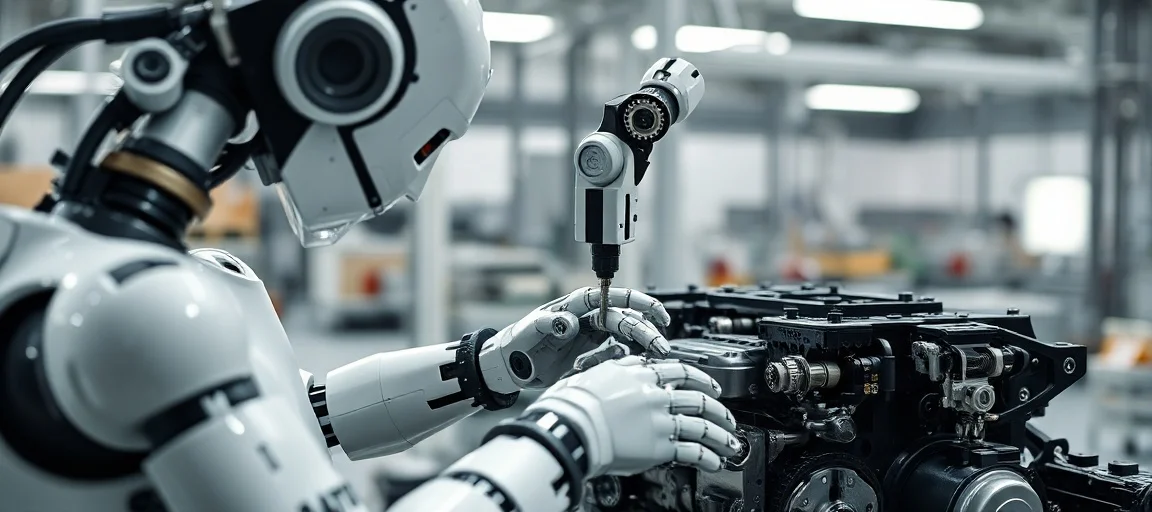
Unlike conventional robotic grippers, this bionic hand features over 20 degrees of freedom and embedded tactile sensors that mimic human skin sensitivity. Its AI learns individual user behavior over time, adapting grip pressure, speed, and motion profiles dynamically.
Early benchmarks show a 37% improvement in task success rate compared to EMG-based prosthetics, according to internal data cited by QbitAI. The system also includes safety failsafes to prevent unintended motion—a critical feature for industrial use.
Applications in Industry and Medicine
Beyond assisting paralysis patients and amputees, the company is partnering with global robotics firms to deploy these hands in warehouse automation, nuclear decommissioning, and micro-manufacturing.
For example, in high-radiation zones, operators can remotely control the bionic hand via neural interface, eliminating direct exposure. In logistics, the AI enables adaptive object recognition—handling irregular shapes like tools, fruits, or electronics with zero training.
The startup, valued at over $1.2 billion after a $200M Series B round, is poised to redefine human-machine symbiosis. While geopolitical headlines stall, innovation in neural interface technology accelerates—ushering in a new era of neuroprosthetics and AI-augmented labor.
For deeper insights into neural decoding algorithms, see Nature’s 2025 BCI review. To explore industrial robotics trends, visit IEEE Robotics & Automation Magazine.