AI Robotic Arm Folds T-Shirts in 40 Seconds | SB Intuitions 2026
SB Intuitions has unveiled a robotic arm system capable of autonomously folding T-shirts in approximately 40 seconds per garment. The breakthrough demonstrates advanced AI-driven dexterity in household robotics.

AI Robotic Arm Folds T-Shirts in 40 Seconds | SB Intuitions 2026
summarize3-Point Summary
- 1SB Intuitions has unveiled a robotic arm system capable of autonomously folding T-shirts in approximately 40 seconds per garment. The breakthrough demonstrates advanced AI-driven dexterity in household robotics.
- 2AI Robotic Arm Folds T-Shirts in 40 Seconds | SB Intuitions 2026 SB Intuitions, an AI research subsidiary of SoftBank, has unveiled a groundbreaking robotic system capable of autonomously folding T-shirts in approximately 40 seconds per garment.
- 3The demonstration, released in a public video in early 2026, marks a significant leap in household robotics — proving AI can now master the complex physics of fabric manipulation with human-like precision.
psychology_altWhy It Matters
- check_circleThis update has direct impact on the Robotik ve Otonom Sistemler topic cluster.
- check_circleThis topic remains relevant for short-term AI monitoring.
- check_circleEstimated reading time is 3 minutes for a quick decision-ready brief.
AI Robotic Arm Folds T-Shirts in 40 Seconds | SB Intuitions 2026
SB Intuitions, an AI research subsidiary of SoftBank, has unveiled a groundbreaking robotic system capable of autonomously folding T-shirts in approximately 40 seconds per garment. The demonstration, released in a public video in early 2026, marks a significant leap in household robotics — proving AI can now master the complex physics of fabric manipulation with human-like precision.
How AI Dexterity Enables Precision Folding
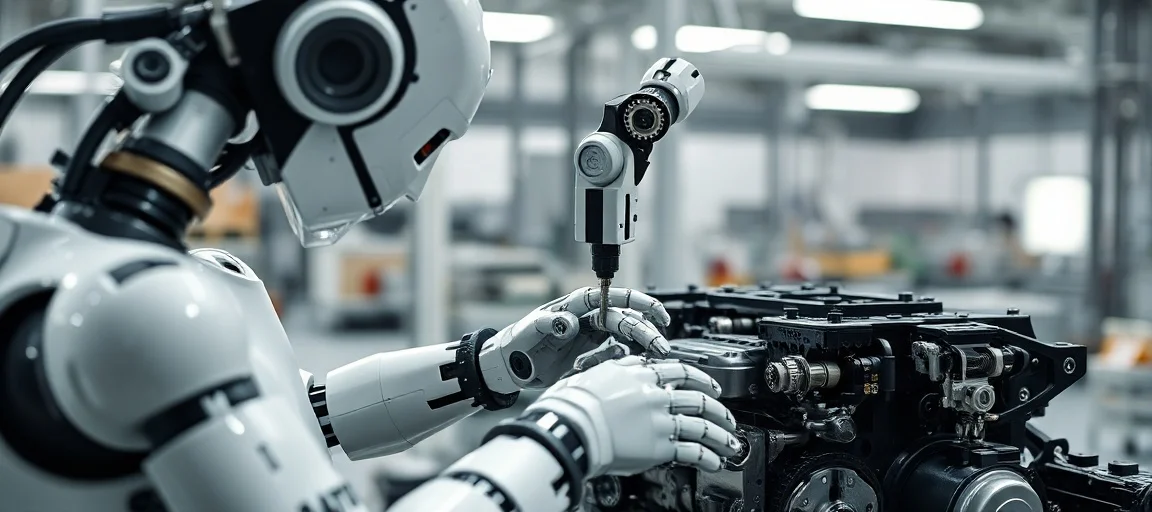
The two-armed robotic system combines computer vision, real-time tactile feedback, and deep reinforcement learning to identify fabric orientation, grasp corners accurately, and execute a sequence of folds without human intervention. Unlike earlier systems that required standardized garments, this model adapts to variations in size, material, and wrinkles — a major breakthrough in clothing manipulation.
From Lab Prototype to Real-World Utility
According to IT Media, the prototype was developed over years of iterative testing, training the AI on thousands of simulated and real-world folding scenarios. Success came not from brute-force motion, but from predicting fabric behavior and dynamically adjusting grip strength — a level of adaptability once thought impossible outside research labs.
Comparison to Human Folding Speed
At 40 seconds per T-shirt, the robot matches or beats the average human folding time, especially when accounting for consistency and fatigue. For elderly users, busy households, or commercial laundries, this speed translates into tangible labor savings and improved efficiency in automated laundry workflows.
Future of Household Robotics in 2026
This innovation signals a shift from industrial automation to personal assistance robotics. While factory robots handle rigid parts, SB Intuitions’ system tackles soft, deformable objects — a far more complex challenge. Experts believe this is the first step toward fully integrated smart home ecosystems where chores become automated rituals.
Home automation companies, senior care facilities, and laundry service providers are already evaluating integration paths. Though not yet commercially available, the public release of the video signals intent to move beyond proof-of-concept. Key next steps include cost reduction, safety certification, and compatibility with existing smart home platforms like Google Home and Apple HomeKit.
The broader AI community is taking notice. While Anthropic’s co-founders emphasize foundational research in human-AI collaboration, SB Intuitions’ work exemplifies how theoretical advances in machine learning can deliver tangible, everyday utility. This isn’t just about language models — it’s AI acting in the physical world.
As robotics evolves, systems like this may soon become standard in smart homes. The milestone here isn’t just speed — it’s the demonstration that AI can replicate nuanced human dexterity with reliability. The future of laundry is autonomous, and it’s arriving faster than expected in 2026.